


Blogs
The UAE’s Vision for Non-Oil Exports
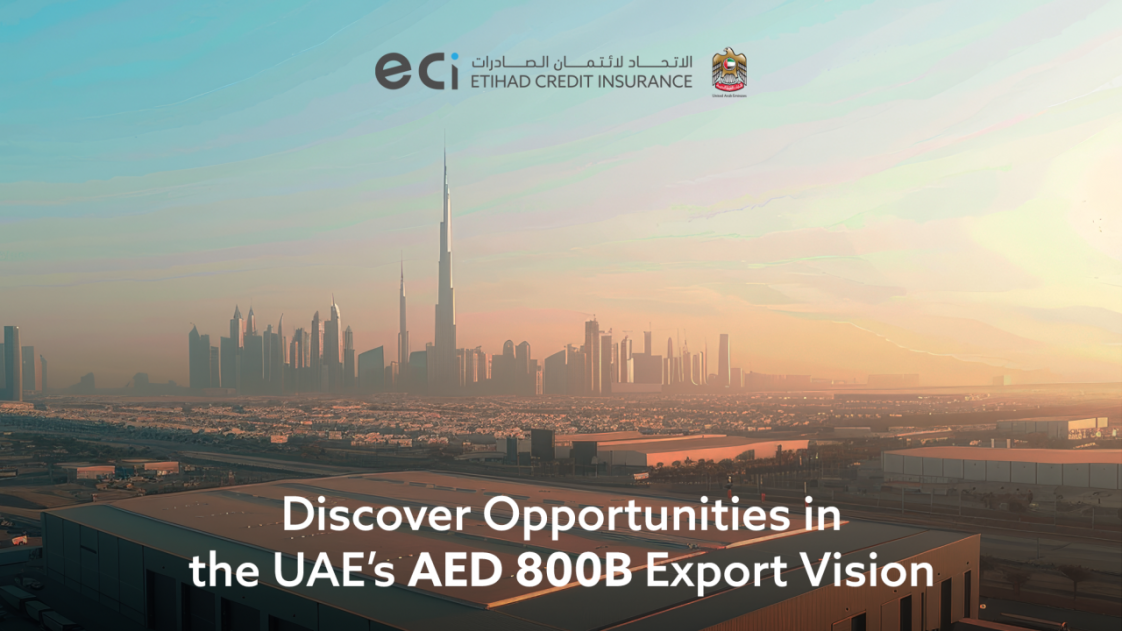
The UAE's Vision for Non-Oil Exports: Challenges and Opportunities
As the UAE shapes its long-term economic future, non-oil exports have become a central driver of growth and diversification. Anchored by the 'We the UAE 2031' vision, the nation aims to raise non-oil exports to AED 800 billion—an ambitious goal backed by proactive policy, global partnerships, and business-friendly reforms.
For UAE exporters, this shift brings significant opportunities—but also the need to navigate complex risks and evolving global conditions.
Why Non-Oil Trade Is a National Priority
Non-oil exports are key to building a more resilient and future-ready economy. By reducing dependence on hydrocarbons, the UAE is unlocking new avenues for sustainable growth—through high-potential sectors like manufacturing, food and agriculture, clean energy, electronics, and healthcare.
Strategic Opportunities for UAE Exporters
- Bilateral Trade Agreements — The UAE has signed multiple Comprehensive Economic Partnership Agreements (CEPAs) with countries like India, Türkiye, and Indonesia—offering preferential access, reduced tariffs, and simplified logistics.
- Sustainability-Driven Market Demand — ESG-focused markets are seeking environmentally responsible suppliers. UAE exporters that align with global sustainability standards are better positioned to secure international deals and long-term buyers. ECI's Green Working Capital Insurance supports businesses pursuing sustainable export strategies.
- Digitalisation and Smart Infrastructure — The UAE's investment in digital trade, blockchain, and automation is enhancing logistics, compliance, and financing access—giving exporters the tools to expand efficiently.
- Strong Government Ecosystem — Government-led institutions like Etihad Credit Insurance (ECI) provide essential support in the form of risk mitigation, market insights, and strategic partnerships to help exporters scale globally. Explore how ECI compares to private insurers in ECI vs Private Credit Insurers.
Key Challenges in the Global Export Landscape
Even with strong government support, UAE exporters must manage risks such as:
- Geopolitical tensions and sanctions — covered under Political Risk Insurance
- Currency fluctuations and inflation
- Payment delays and buyer defaults — mitigated through Non-Payment Insurance
- Supply chain volatility — addressed by Supply Chain Finance Insurance
- Regulatory and ESG compliance barriers in new markets
How ECI Helps Deliver the UAE's Non-Oil Trade Vision
As the UAE's federal export credit company, ECI plays a critical role in supporting businesses aligned with the country's strategic trade goals. Through:
- Trade credit insurance that protects up to 90% of receivables
- Global market insights based on 400M+ buyer records via the Global Market Explorer
- SME support programs through the Xport Xponential Programme that improve access to finance
- Political Risk Insurance to operate safely in frontier and emerging markets
- Partnerships with banks, chambers, and international ECAs via ECI's Partners Ecosystem
ECI enables UAE exporters to expand into new markets with greater security and confidence.
Conclusion
The journey toward AED 800 billion in non-oil exports is a national mission—requiring innovation, resilience, and trusted partners. With the right tools, financing solutions, and risk protections, UAE businesses can seize new global opportunities and help lead the next phase of the country's growth.